
The Current State of Security Measures for Remote Work: The Necessity of Security Measures from Numbers
With work style reforms, companies are actively adopting telecommuting and remote work. Work options have increased, and new work styles that do not depend on location or time have been established. Some companies are reviewing and improving their security when introducing remote work.
However, some people may be wondering how many companies are actually implementing security measures for telecommuting.
In this article, we will introduce the current state of security in telecommuting and remote work, along with the number of companies implementing security measures and examples of damage caused by remote work.
Table of Contents
- Remote Work Security Status
- Percentage of Companies Implementing Security Measures (by Industry)
- Percentage of Companies Implementing Security Measures (by Size)
- Reasons for Not Implementing Remote Work Security Measures
- Risks of Not Implementing Remote Work Security Measures
- PCs and Tablets Become Unusable
- Information is Falsified or Leaked
- Examples of Damage in Remote Work
- Loss of Accounts and Passwords
- Malware Infection
- Security Measures for Remote Work: “Endpoint Security”
- Endpoint Security: “EXO Security”
- Summary
1. Remote Work Security Status
First, let’s look at the current state of remote work security.
We will explain based on the “Actual Survey on Telework Security” conducted by the Ministry of Internal Affairs and Communications from December 2020 to January 2021, targeting companies in various industries.
1-1. Percentage of Companies Implementing Security Measures (by Industry)
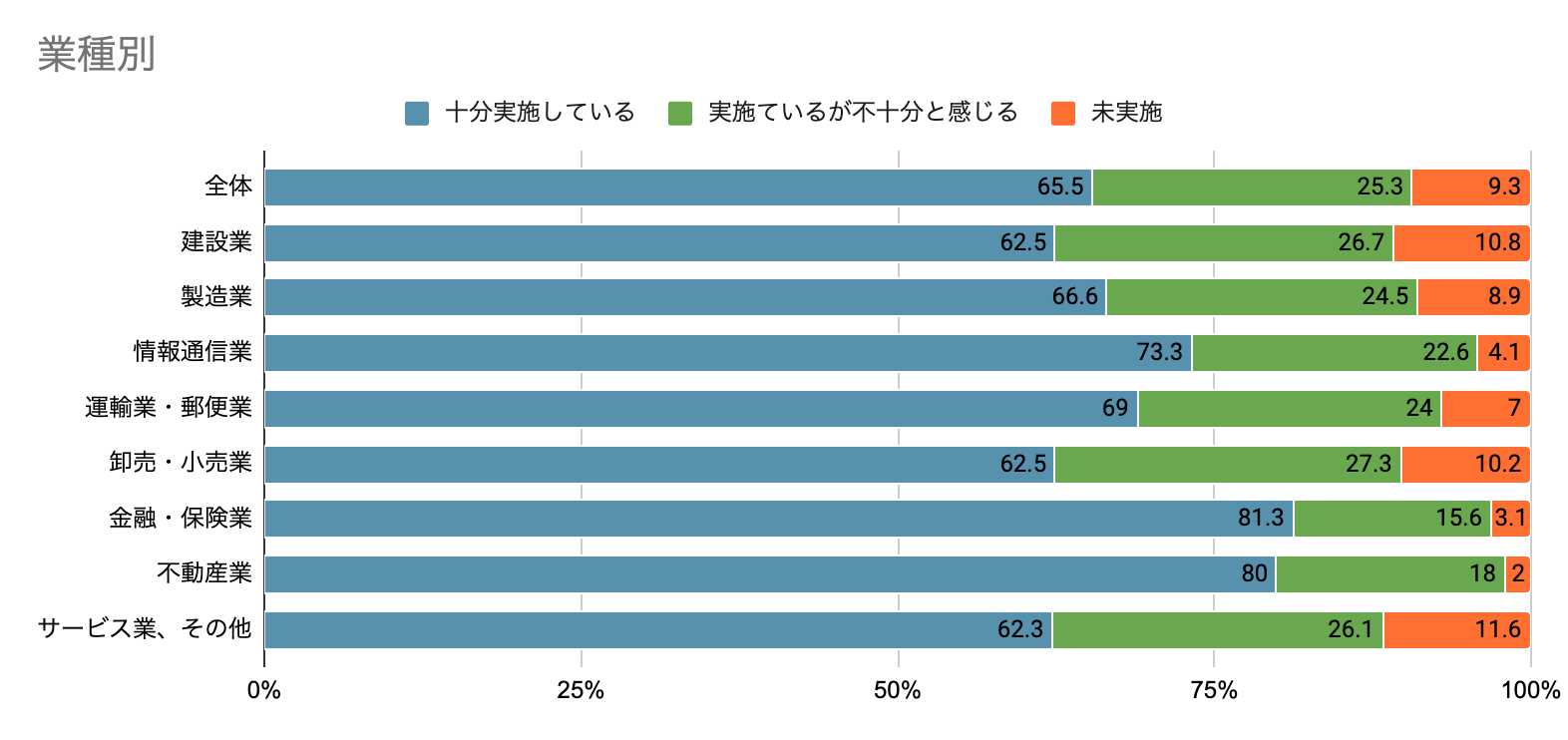
Looking at the graph data below, 60% of companies are implementing security measures.
10% of companies have not implemented any measures. When looking at it by industry, the implementation rate for companies that hold a large amount of customer information, such as the financial and insurance industries, exceeds 80%.
1-2. Percentage of Companies Implementing Security Measures (by Size)
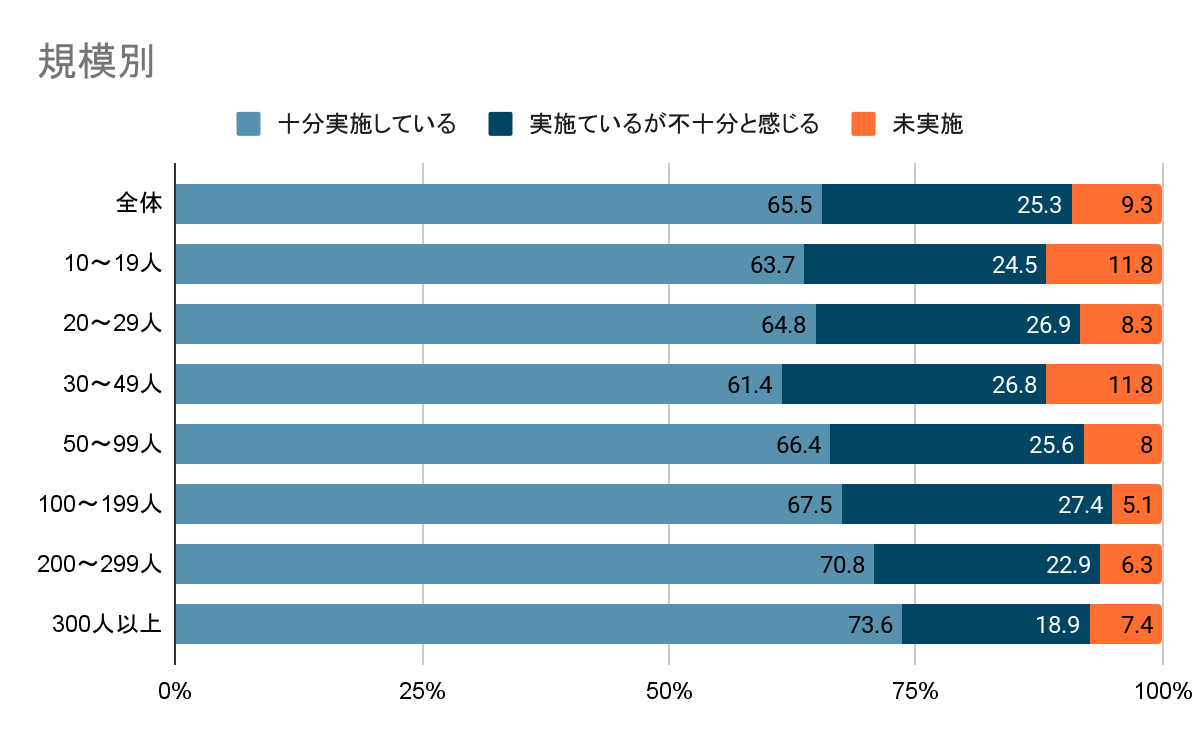
When looking at it by size, 60% of companies, regardless of size, implement security, and the implementation rate for companies with 200 or more employees exceeds 70%.
1-3. Reasons for Not Implementing Remote Work Security Measures
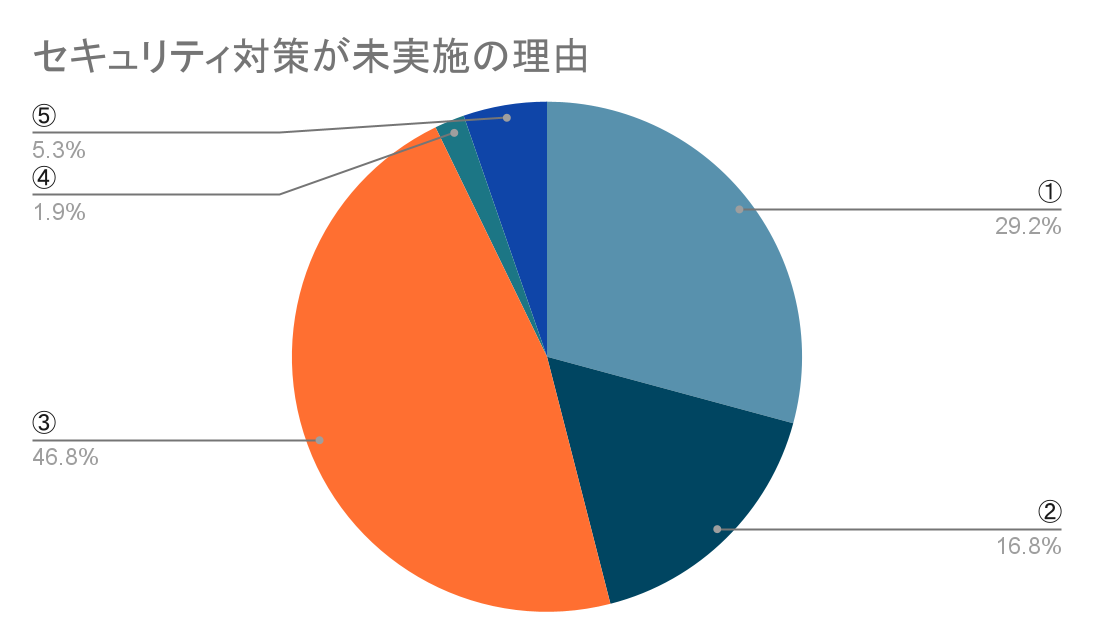
From the graph above, let’s look at the reasons why 10% of companies that answered that they have not implemented remote work security measures have not implemented them.
The answer results are the following five reasons:
- Have not considered the content of the measures
- Do not feel the necessity of the measures
- Have not implemented, but are considering
- Have suggested implementing measures, but the management decided not to implement them
- Other
2. Risks of Not Implementing Remote Work Security Measures
From the graph above, 10% of companies answered that they do not feel the need for security measures. Is security really unnecessary?
Here, we will introduce two risks that can occur if security measures are not implemented.
- PCs and tablets become unusable
- Information is falsified or leaked
2-1. PCs and Tablets Become Unusable
The increasingly prevalent ransomware infects and locks down PCs and servers, demanding ransom. Work becomes impossible, and resources must be allocated to deal with the virus, significantly decreasing productivity.
2-2. Information is Falsified or Leaked
Server attacks can lead to the risk of information falsification and leakage. When working at a cafe, public Wi-Fi that can be used for free may not be encrypted, so communications may be intercepted.
If customer and business partner data is leaked, relationships may deteriorate. It takes time to regain lost trust. Security measures need to be taken to prevent these problems.
2-3. Examples of Damage in Remote Work
From the Ministry of Internal Affairs and Communications’ Telework Security Guidelines, we will introduce specific examples of damage that has occurred in remote work.
2-4. Loss of Accounts and Passwords
In May 2020, a regular account and password were stolen from a personal device using remote access, and there was a risk that the file server within the organization was viewed, affecting more than 180 companies.
2-5. Malware Infection
In May 2020, an employee of a group company opened a file attached to a free email, and one PC was infected with malware. A malware detection system had been introduced, but the malware embedded in the file attached to the email was a new type, so malware detection was delayed, and more than 10,000 personal information items, including names and email addresses, were leaked.

3. Security Measures for Remote Work: “Endpoint Security”
“Endpoint security” is attracting attention as a security measure for performing work outside the company, such as customer remote work. “Endpoint” refers to the terminal devices connected to the network, that is, PCs, smartphones, and tablets.
Conventional security measures mainly protected in-house servers and PCs. However, with the introduction of remote work in recent years, there are more opportunities to take information out of the company. Using the Internet and servers outside the company involves various risks, such as security.
Endpoint security is a security measure designed for remote work and use outside the company.
4. Endpoint Security: “EXO Security”
As remote work is promoted, the opportunities to work outside the company will increase.
Endpoint security is a security measure for people who work outside the company. However, many people may be wondering which endpoint security to choose.
Therefore, in this article, we will introduce “EXO Security” as endpoint security.
EXO Security is a security measure tool specializing in endpoint security and can prepare for various security risks.
The main features are:
- Anti-malware function using AI and cloud analysis technology
- Supports new types of ransomware
- Blocks access to malicious sites
- Security measures compatible with remote access
- Low price and easy to implement
In addition to these, there are many other features, and “EXO Security” is recommended because it fully covers the functions required for endpoint security measures.
⇨ Comprehensive Endpoint Security for Corporations: “EXO Security”
Summary
This time, we introduced the current state of security measures for remote work.
We don’t know when cyber attacks will occur in the future, but we want to prepare as much as possible for risks that can be prevented.
Managers and people in charge should consider security measures and endpoint security measures to enable employees to work remotely with peace of mind.
Antivirus Security Software “EXO Security”
Special Feature Page “Is Your Company’s PC Really Safe?”


